
If your work involves a longwall panel, chances are you have worked alongside the American-owned, family-operated Longwall Associates. In May, the company marks three decades in business and is looking back on its history as well as forward to its future.
Edited by Donna Schmidt
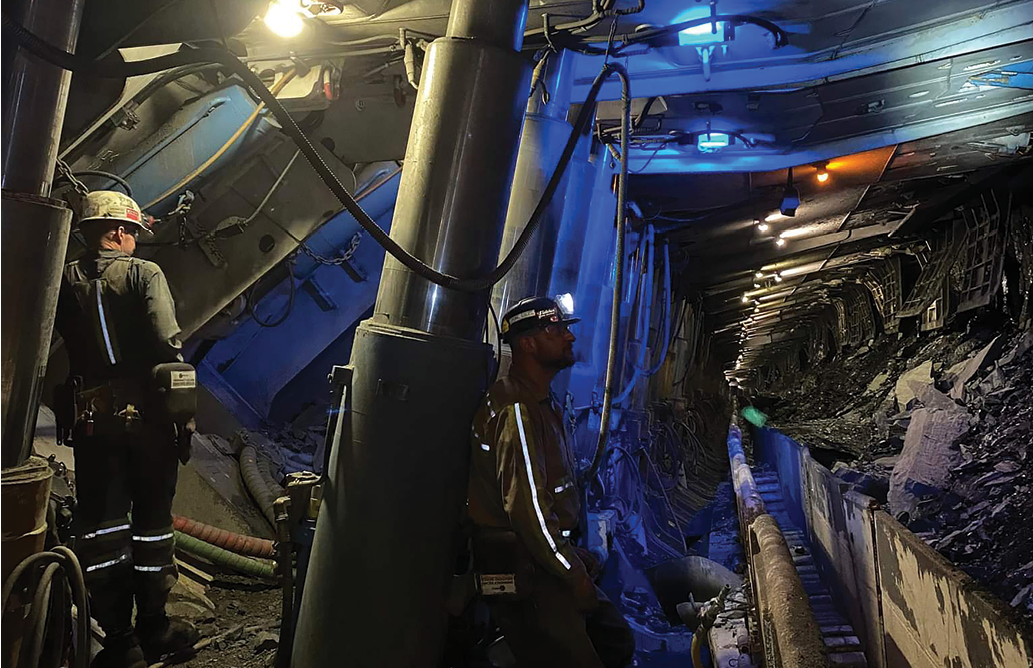
On May 14, 2026, Virginia-headquartered Longwall Associates will mark its 30th anniversary. While many know of the family business, not many know how it got started – and even fewer have heard the group’s mission for the future. NAM recently talked to the Campbell family and heirs of founder Tony Campbell about their many milestones.
NAM: Can you talk more about the history of Longwall Associates?
LWA: LWA began as a one-man operation. Today, the company employs over 100 people and commands a consistent market share. We remain privately held and wholly American-owned, the only OEM longwall conveyor supplier with those bragging rights.
Tony Campbell, founder and former CEO of Longwall Associates, began his longwall career working for American Longwall in 1980. Shortly thereafter, he saw an opportunity to launch a small fabrication shop.
Tony was able to procure equipment, and together with a partner, they rented a garage. Their new business was called C&A Fab. Tony worked two jobs, the paying job at American Longwall and the other trying to get the fabrication facility off the ground. Over the next few years, Tony and his partner moved their operation to a slightly larger facility to accommodate growth. During this time, American Longwall had a substantial portion of the U.S. longwall market and was their largest customer.
C&A Fab also performed work for local and state businesses and organizations. As the business grew, so did the demands on Tony’s time. As a result, Tony left his day job and became fully immersed in his own business, adept at managing the company and skilled enough to work in the shop. In 1989, they purchased land in Smyth County, Va., and built a manufacturing shop with approximately 8,300 square feet and added 11 employees to their existing staff of four. Soon afterwards, Tony’s partner sold his interest to Tony, and Tony became the sole owner. Together with his wife, Josie, they ran the small company with 15 employees.
Throughout the 1990s, Tony performed sub-contract fabrication work for American Longwall as well as various other metal fabrication work for local companies, and at the same time made valuable industry contacts and built a solid reputation while gaining insight into the longwall conveyor market.
In 1992, Tony added another 12,500 sq. ft. to the existing plant and 3,500 sq. ft. to the main office, adding a second shift and another 15 employees for a total of 30. In 1995, as the U.S. longwall equipment market began shifting via mergers and acquisitions, namely America Longwall being acquired, Tony saw another opportunity to expand from sub-contract work to OEM supplier.
On May 14, 1996, LWA was officially born. Even though LWA was a new supplier, the company’s roots and employees had decades of experience in the longwall equipment field, as some employees of the newly formed LWA were industry veterans.
Almost immediately after inception, LWA confidently took on arguably the most arduous mines in the U.S. as its first OEM job. These mines were notorious for rock, abrasivity and excessive equipment wear. LWA worked alongside these customers to develop equipment specifically suited for their abrasivity and their significant wear. Through this symbiotic relationship, LWA was able to detail and refine its equipment line-up. LWA was able to achieve a similar synergetic relationship with the next several clients and those relationships were key milestones to LWA’s growth.
In 1997, Tony became the sole owner of LWA after acquiring his partner’s interest. The company employed about 100 people on two shifts at this time. By 1998, within a year and a half of inception, LWA had secured a total of five orders for complete OEM longwall face conveyor systems in the U.S. This was enormous for the small company.
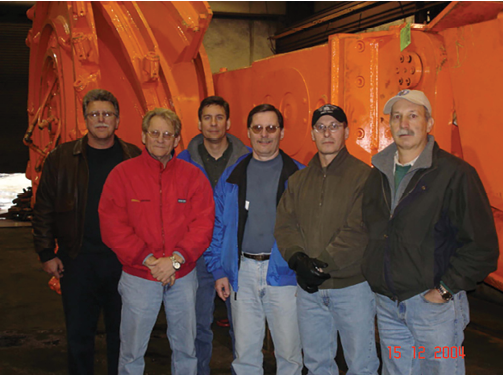
Can you outline growth in the new millennium and initial years of existence?
In the first four years, LWA began to establish a loyal following in the U.S., supplying OEM equipment to mines across the USA. Additionally, in 2000, LWA had its first international sales, delivering its OEM pan line to an Australian mine. The following March, its Australian facility was opened in Mackay (that facility would close in 2007 and manufacturing would return entirely state-side).
By 2002, LWA had achieved a toe-hold in the U.S. longwall face conveyor market. Additionally, the company continued to expand, adding a transmission facility. The momentum continued and, in 2003, LWA added 50,000 sq. ft. of manufacturing space. In March 2004, we got our first order in China, with a subsequent delivery shortly thereafter for a full longwall face conveyor system. Over the next 15 years, LWA would export OEM longwall conveyor equipment to China.
In 2010, LWA delivered its first OEM longwall face conveyor system to Mexico. From 2010 to 2020, LWA continued to focus on the core U.S. market and as a result, continued to maintain and gain market share. In 2020, LWA purchased an adjacent manufacturing building with over 50,000 sq. ft. of manufacturing space and additional machining capabilities.
In 2021, LWA founder Tony Campbell lost his brave and very private battle with cancer. Paul remained president and his other children, Shelley and Lance, remain committed to the success of the company.
Today, there isn’t much that has changed within LWA. We hold on to our roots and conduct business just was done 30 years ago. The company has grown from very humble beginnings to occupying a permanent foothold in the U.S. longwall market and continues to export.
In 30 years, LWA has evolved from a two-person start-up company to a leader in the supply of longwall conveyors to the U.S. market with international reach supplying equipment to Australia, Mexico and China achieving as much as 30% of the market throughout the years.
What were the original missions of Longwall Associates, and how have those evolved?
The original mission of LWA, as with any small start-up, is survival. In order to achieve that, LWA established its business conduct around providing customer-based solutions and cultivating genuine relationships with customers. The mantra has delivered 30 years of success and really hasn’t changed. The core of LWA is delivering equipment with customized solutions.
Our first product in the line was our pan line. Upon inception, our product line was completely customer driven. Our first OEM customer had experienced significant wear and fatigue of their pan line, so that is where we started, with the line pan.
We began working in collaboration with this customer to design and manufacture a pan line that would increase life expectancy and resist wear. This development produced patented processes and the induction of specialized material. We hit a home run and over 20,000 line pans later, LWA has commanded a significant portion of the pan line market share. We have manufactured over 125 complete pan lines for customers; and over 100,000 flight bars. Interestingly our sprocket assembly product line evolved in a similar fashion, through collaboration with our customers developing proprietary and patented process and materials leading to the sale of well over 1,250 sprocket assemblies. Having produced well over 100 face conveyors and stageloaders and a host of ancillary equipment, we estimate our customers have mined over 3 billion tons of coal with our equipment.
What are the keys to growth for the company?
Relationships with customers, LWA staff, opportunities, and listening. From our beginning we had the unique and prophetic opportunity to develop strategic partnerships with customers to develop and refine our product line. Our customers investment into our company played a huge role in our success. Those early relationships with customers helped shape our company and laid a foundation for our growth.
Additionally, our dedicated staff is key to LWA’s growth. The majority of our staff have been at LWA since the 1990s, some since the 1980s. In the early days, LWA had a mix of industry veterans and longwall rookies. Now the rookies have evolved into the veterans.
Recognizing and harnessing opportunities would also be a factor in our growth. When the very literal origins of your company evolve from “opportunity”, you become hypervigilant to emerging opportunities. Capitalizing on various opportunities throughout our history has secured a foothold in the U.S. market and put our equipment in China, Mexico and Australia.
Lastly, listening is key. LWA actively listens to our customers. As a result, we are able to truly offer customized solutions.
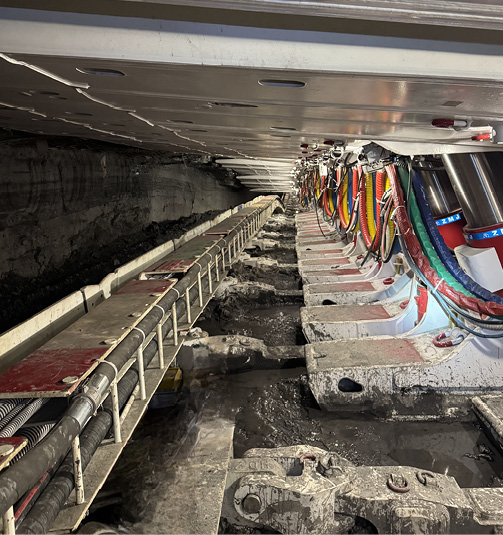
What is your input on the current state of the longwall industry?
The industry, in our opinion, is strong. Market conditions for domestic coal production, consumption and exports will always ebb and flow, but we don’t see that as the sole significant driver for the longwall industry.
In 1996, there were 72 operating longwall mines in the U.S. Today there are 36. The number of operating longwalls has declined by half in 30 years. However, almost all of those 36 mine closures were due to reserves being mined out. Longwall mining equipment has become more efficient and productive over time. If you look at panel width in 1996, most panels were less than 1,000 ft.; today, panel widths are approximately 1,500 ft. Additionally, while the number of longwall mines has decreased, actual longwall production output has only decreased by around 30%.
So, you have an industry that has contracted, but remains strong. Longwall equipment has become more efficient and the industry as a whole has become adept at handling and balancing market fluctuations.
Where do you think the industry is headed now, and what are the main obstacles and opportunities to get there?
Global energy consumption will not decrease, and it is dangerous to think that world energy consumption will be 100% green-sourced. It just isn’t possible. Our industry will keep supplying coal, and LWA will continue to supply innovative equipment and our customers will continue supplying coal to their markets.
From that purview, one of the biggest challenges and opportunities is narrative. Quite simply, this country was built on the back of coal. You look at any city or small town or rural farm community, from the concrete to the steel, to providing affordable energy to each of those locations, coal is the backbone. There is no denying that.
Over the last 20 years, there has been a push to move away from fossil fuels. However, fossil fuels have become uber-efficient and clean, and quite simply, green energy can’t keep up with demand. Additionally, green energy has its own adverse repercussions. We believe that as long as you have growth, you will have fossil fuels, and specifically coal.
The negative narrative surrounding coal must be reconciled with the fact that mining coal has never been more efficient and clean. Energy sectors are held to rigorous standards by regulatory bodies and coal mining continues to meet those challenges.
One of the best opportunities for our industry is to rewrite the narrative on coal and shine the light on coal’s achievements. Because of coal, we have concrete and steel, we have water filtration systems, dialysis machines in the healthcare industry, computer chips and carbon fibers…the list is truly long. Coal truly reaches into so many parts of our life that the average person doesn’t comprehend. The narrative needs to change, because coal mining will go on.
What do you want people to know about LWA as it turns 30?
The company has plans to continue doing what they’re good at, and to grow at a modest pace. Although the company is young, we have captured over 10% of the U.S. longwall market.
If you could ask Tony what he is most proud of, he’d tell you that he’s proud of many things, but most of all, he’s proud of the entire staff. While small relative to our competitors, Longwall Associates has no aspirations of becoming the biggest. Instead, we want to be the best. We are proud that our operations aren’t about pleasing shareholders. Our operations are about the people who work for Longwall Associates and the people Longwall Associates work for at the mines.